Domain audio-mastering-guide.de kaufen?
Wir ziehen mit dem Projekt
audio-mastering-guide.de um.
Sind Sie am Kauf der Domain
audio-mastering-guide.de interessiert?
domain@kv-gmbh.de · 0541-91531010
Domain audio-mastering-guide.de kaufen?
Was ist log(1) / log(11000) und warum?
log(1) / log(11000) ist gleich 0, da der Logarithmus von 1 immer 0 ergibt. Da der Logarithmus von 11000 größer als 1 ist, wird 0 durch eine größere Zahl geteilt, was zu einem Ergebnis von 0 führt. Dies liegt daran, dass der Logarithmus einer Zahl x zur Basis x immer 1 ergibt. **
Sagt ihr "der Log-in" oder "das Log-in"?
Beide Varianten sind möglich, aber "der Log-in" wird häufiger verwendet. Es handelt sich dabei um eine Anglizismus-Anpassung des englischen Begriffs "login". **

Ähnliche Suchbegriffe für Devart-dbForge-Transaction-Log
Top-Angebote
Produkte zum Begriff Devart-dbForge-Transaction-Log:
-
Lowe, Norman: Mastering Modern World HistoryMastering Modern World History , The sixth edition of this bestselling book takes students on a journey through the 20th century and provides a clear overview of the key events which have shaped modern world history. Unrivalled in its broad coverage, it: - Surveys international relations and war , from 1900 to the present day - Examines the rise and fall of fascism and communism around the globe - Explores the international affairs of the major superpowers : the USA, Russia/USSR and China - Assesses the experience of decolonization in India, Africa and Latin America - Unpicks global issues , including economic crises and population increase Chapters feature maps, diagrams and end-of-chapter questions to support and reinforce understanding. This new edition has been updated to take account of new scholarship, and provide a more global approach to key chapters in modern world history. Key changes include: - New material on the Second World War, beginning with the outbreak of war between China and Japan, and touches upon Italy's campaigns in East and North Africa and Civil Wars taking place in China, Spain and the Ukraine - Coverage of new historical interpretations of the events that led to the First World War - New chapters on the history of the United States of America - A new chapter on Tsar Nicholas II and the Russian Revolutions of 1917. Mastering Modern World History is the go-to textbook for secondary school students and undergraduates studying modern world history and international relations, and an ideal companion for anyone with an interest in how the world got into its present state. , > , Auflage: 6. Auflage, Erscheinungsjahr: 202208, Produktform: Kartoniert, Beilage: Paperback, Autoren: Lowe, Norman~Traynor, John, Auflage: 22006, Auflage/Ausgabe: 6. Auflage, Seitenzahl/Blattzahl: 720, Abbildungen: 20 illustrations (plus the diagrams, tables and maps indicated below), Themenüberschrift: HISTORY / World, Keyword: Twentieth Century History; Twenty-First Century History; International Relations; European History; Global and Transnational History; undergraduate history; industrialisation; empire; Soviet Union; America; Europe; A level; First Second World War; I II One Two; US presidencies; Russia; Arab Spring; Islamism; BRIC countries; European Union; North South Korea; international politics; refresher World history; world economics; 20th century ideology; dictatorships; decolonization; civilisation; society; source questions; globalization; population explosion, Fachschema: Zwanzigstes Jahrhundert, Region: Welt, Zeitraum: 20. Jahrhundert (1900 bis 1999 n. Chr.)~21. Jahrhundert (2000 bis 2100 n. Chr.), Warengruppe: HC/Geschichte/Sonstiges, Fachkategorie: Geschichte allgemein und Weltgeschichte, Text Sprache: eng, Seitenanzahl: XVII, Seitenanzahl: 688, UNSPSC: 49019900, Warenverzeichnis für die Außenhandelsstatistik: 49019900, Verlag: Bloomsbury Academic, Verlag: Bloomsbury Academic, Länge: 234, Breite: 157, Höhe: 37, Gewicht: 960, Produktform: Kartoniert, Genre: Importe, Genre: Importe, Vorgänger EAN: 9781137276940 9781403939821 9780333685235, Herkunftsland: GROSSBRITANNIEN (GB), Katalog: LIB_ENBOOK, Katalog: Gesamtkatalog, Katalog: Internationale Lagertitel, Katalog: internationale Titel, Katalog: Kennzeichnung von Titeln mit einer Relevanz > 30, Katalog: Lagerartikel, Book on Demand, ausgew. Medienartikel, Relevanz: 0060, Tendenz: +1, Unterkatalog: AK, Unterkatalog: Bücher, Unterkatalog: Hardcover, Unterkatalog: Lagerartikel, WolkenId: 14293433,47 €*Versand: 0,00 €Sichere Weiterleitung zum Anbieter




-
Wächst log(n) genau so schnell wie log(n70)?
Nein, log(n) wächst langsamer als log(n70). Die Funktion log(n) gibt den Logarithmus von n zur Basis 10 zurück, während log(n70) den Logarithmus von n70 zur Basis 10 berechnet. Da n70 größer ist als n, ist log(n70) größer als log(n) und wächst daher schneller. **
-
Wie kann ich log 10 log 2 ohne Taschenrechner berechnen?
Um log 10 log 2 zu berechnen, kannst du die Logarithmengesetze verwenden. Da log 10 den Wert 1 hat, kannst du log 10 log 2 als log 2 berechnen. Da log 2 ungefähr 0,3010 ist, ist log 10 log 2 ungefähr 0,3010. **
-
Was heist log?
"Was heißt log?" ist eine Frage, die sich auf den Begriff "log" bezieht, der verschiedene Bedeutungen haben kann. Im Allgemeinen wird "log" als Abkürzung für "Logarithmus" verwendet, eine mathematische Funktion, die das Verhältnis zwischen zwei Zahlen angibt. In der Informatik kann "log" auch als Abkürzung für "Logdatei" verwendet werden, in der Informationen über Ereignisse oder Aktivitäten gespeichert werden. Darüber hinaus kann "log" auch als Verb verwendet werden, um das Aufzeichnen von Informationen oder Ereignissen zu beschreiben. Letztendlich hängt die Bedeutung von "log" stark vom Kontext ab, in dem es verwendet wird. **
-
Wie spricht man "log n" aus, ausgesprochen "log stern von n"?
"Log n" spricht man als "logarithmus von n" aus. **


Wie berechnet man \(a^{a \log x}\) und \(a^{2a \log 2}\)?
Um \(a^{a \log x}\) zu berechnen, können wir die Potenzregel \(a^{b \cdot c} = (a^b)^c\) verwenden. Somit ergibt sich \(a^{a \log x} = (a^a)^{\log x}\). Für \(a^{2a \log 2}\) können wir ebenfalls die Potenzregel anwenden und erhalten \(a^{2a \log 2} = (a^{a \log 2})^2\). Anschließend können wir die Potenzen von \(a\) und \(a \log 2\) berechnen, indem wir die Exponentialfunktion verwenden. **
Was ist der Log?
Der Log ist ein Protokoll oder eine Aufzeichnung von Ereignissen, die in einem System oder einer Anwendung auftreten. Er dient dazu, wichtige Informationen über den Betrieb und die Aktivitäten des Systems festzuhalten, um Fehler zu diagnostizieren, Sicherheitsvorfälle zu untersuchen oder Leistungsprobleme zu analysieren. In der Regel werden verschiedene Arten von Logs erstellt, wie z.B. Systemlogs, Sicherheitslogs oder Anwendungslogs. Diese Logs können Textdateien, Datenbanktabellen oder andere Formate sein, je nachdem, wie das System konfiguriert ist. Das Lesen und Analysieren von Logs kann hilfreich sein, um Probleme zu identifizieren, Trends zu erkennen oder Compliance-Anforderungen zu erfüllen. **
Top-Angebote
Produkte zum Begriff Devart-dbForge-Transaction-Log:
-
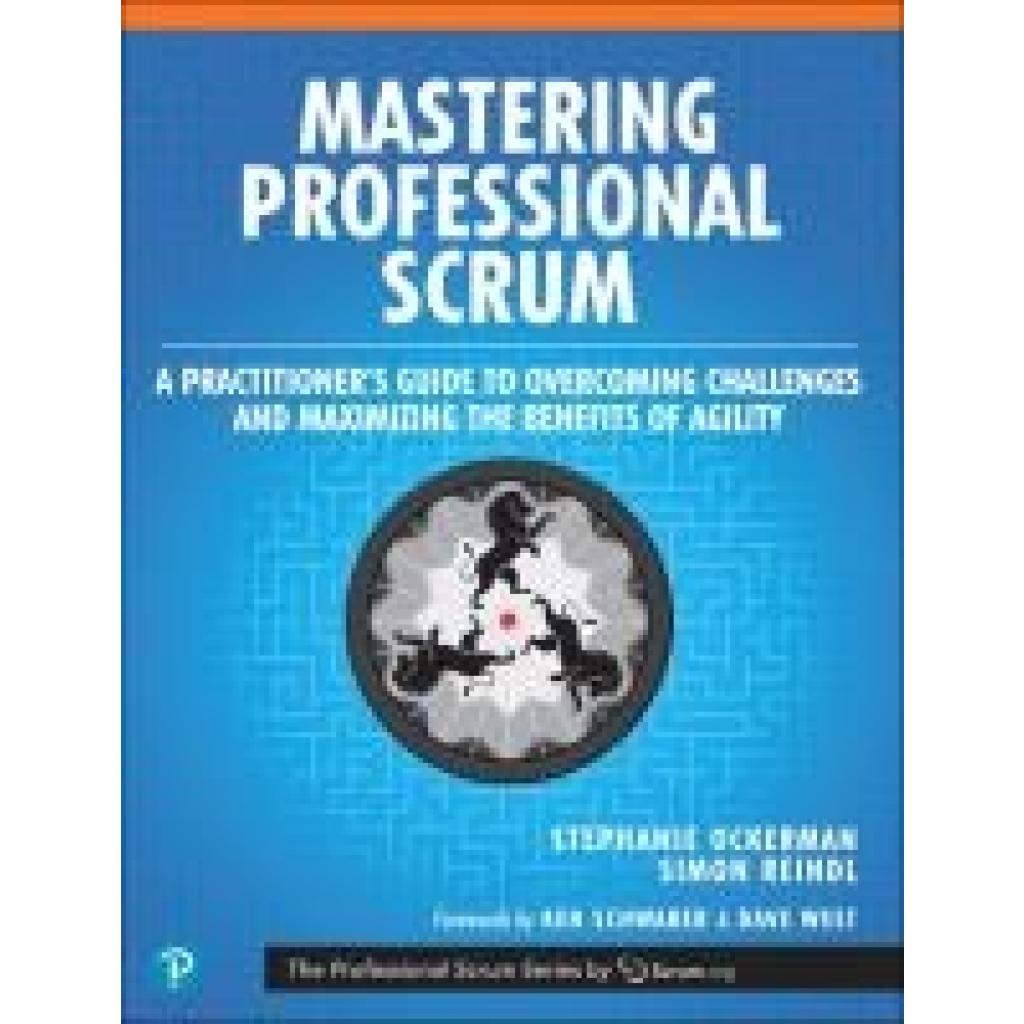
Ockerman, Stephanie: Mastering Professional Scrum: A Practitioners Guide to Overcoming Challenges and Maximizing the Benefits of AgilityMastering Professional Scrum: A Practitioners Guide to Overcoming Challenges and Maximizing the Benefits of Agility , “Our job as Scrum professionals is to continually improve our ability to use Scrum to deliver products and services that help customers achieve valuable outcomes. This book will help you to improve your ability to apply Scrum.”—From the Foreword by Ken Schwaber, co-author of ScrumMastering Professional Scrum is for anyone who wants to deliver increased value by using Scrum more effectively. Leading Scrum practitioners Stephanie Ockerman and Simon Reindl draw on years of Scrum training and coaching to help you return to first principles and apply Scrum with the professionalism required to achieve its transformative potential.The authors aim to help you focus on proven Scrum approaches for improving quality, getting and using fast feedback, and becoming more adaptable, instead of “going through the motions” and settling for only modest improvements.Whether you’re a Scrum Master, Development Team member, or Product Owner, you’ll find practical advice for facing challenges with transparency and courage, overcoming a wide array of common challenges, and continually improving your Scrum practice.Realistically assess your current Scrum practice, and identify areas for improvementRecognize what a great Scrum Team looks like and get thereFocus on “Done”—not “sort-of-Done” or “almost-Done”Measure and optimize the value delivered by every Product IncrementImprove the way you plan, develop, and growClear away wider organizational impediments to agility and professionalismOvercome common misconceptions that stand in the way of progressRegister your book for convenient access to downloads, updates, and/or corrections as they become available. See inside book for details. , Luft- & Hydraulikfederung > Sportfederung , Auflage: 1. Auflage, Erscheinungsjahr: 202001, Produktform: Kartoniert, Autoren: Ockerman, Stephanie~Reindl, Simon, Auflage: 19001, Auflage/Ausgabe: 1. Auflage, Seitenzahl/Blattzahl: 224, Themenüberschrift: COMPUTERS / Software Development & Engineering / General, Fachschema: Management / Projektmanagement~Projektmanagement - Projektmarketing~EDV / Theorie / Software-Entw. / Allgemeines~EDV / Theorie / Software-Entw. / Software Engineering~Informatik~Programmiersprachen, Fachkategorie: Agile Softwareentwicklung~Programmier- und Skriptsprachen, allgemein~Software Engineering~Informatik, Imprint-Titels: Pearson Professional, Warengruppe: HC/Informatik, Fachkategorie: Software für Projektmanagement, UNSPSC: 49019900, Warenverzeichnis für die Außenhandelsstatistik: 49019900, Verlag: Addison Wesley, Verlag: Addison Wesley, Länge: 170, Breite: 230, Höhe: 12, Gewicht: 348, Produktform: Kartoniert, Genre: Importe, Genre: Importe, Herkunftsland: VEREINIGTE STAATEN VON AMERIKA (US), Katalog: Gesamtkatalog, Katalog: Internationale Lagertitel, Katalog: internationale Titel, Katalog: Kennzeichnung von Titeln mit einer Relevanz > 30, Katalog: Lagerartikel, Book on Demand, ausgew. Medienartikel, Unterkatalog: AK, Unterkatalog: Bücher, Unterkatalog: Hardcover, Unterkatalog: Lagerartikel,28,71 €*Versand: 0,00 €Sichere Weiterleitung zum Anbieter
-
Lowe, Norman: Mastering Modern World HistoryMastering Modern World History , The sixth edition of this bestselling book takes students on a journey through the 20th century and provides a clear overview of the key events which have shaped modern world history. Unrivalled in its broad coverage, it: - Surveys international relations and war , from 1900 to the present day - Examines the rise and fall of fascism and communism around the globe - Explores the international affairs of the major superpowers : the USA, Russia/USSR and China - Assesses the experience of decolonization in India, Africa and Latin America - Unpicks global issues , including economic crises and population increase Chapters feature maps, diagrams and end-of-chapter questions to support and reinforce understanding. This new edition has been updated to take account of new scholarship, and provide a more global approach to key chapters in modern world history. Key changes include: - New material on the Second World War, beginning with the outbreak of war between China and Japan, and touches upon Italy's campaigns in East and North Africa and Civil Wars taking place in China, Spain and the Ukraine - Coverage of new historical interpretations of the events that led to the First World War - New chapters on the history of the United States of America - A new chapter on Tsar Nicholas II and the Russian Revolutions of 1917. Mastering Modern World History is the go-to textbook for secondary school students and undergraduates studying modern world history and international relations, and an ideal companion for anyone with an interest in how the world got into its present state. , > , Auflage: 6. Auflage, Erscheinungsjahr: 202208, Produktform: Kartoniert, Beilage: Paperback, Autoren: Lowe, Norman~Traynor, John, Auflage: 22006, Auflage/Ausgabe: 6. Auflage, Seitenzahl/Blattzahl: 720, Abbildungen: 20 illustrations (plus the diagrams, tables and maps indicated below), Themenüberschrift: HISTORY / World, Keyword: Twentieth Century History; Twenty-First Century History; International Relations; European History; Global and Transnational History; undergraduate history; industrialisation; empire; Soviet Union; America; Europe; A level; First Second World War; I II One Two; US presidencies; Russia; Arab Spring; Islamism; BRIC countries; European Union; North South Korea; international politics; refresher World history; world economics; 20th century ideology; dictatorships; decolonization; civilisation; society; source questions; globalization; population explosion, Fachschema: Zwanzigstes Jahrhundert, Region: Welt, Zeitraum: 20. Jahrhundert (1900 bis 1999 n. Chr.)~21. Jahrhundert (2000 bis 2100 n. Chr.), Warengruppe: HC/Geschichte/Sonstiges, Fachkategorie: Geschichte allgemein und Weltgeschichte, Text Sprache: eng, Seitenanzahl: XVII, Seitenanzahl: 688, UNSPSC: 49019900, Warenverzeichnis für die Außenhandelsstatistik: 49019900, Verlag: Bloomsbury Academic, Verlag: Bloomsbury Academic, Länge: 234, Breite: 157, Höhe: 37, Gewicht: 960, Produktform: Kartoniert, Genre: Importe, Genre: Importe, Vorgänger EAN: 9781137276940 9781403939821 9780333685235, Herkunftsland: GROSSBRITANNIEN (GB), Katalog: LIB_ENBOOK, Katalog: Gesamtkatalog, Katalog: Internationale Lagertitel, Katalog: internationale Titel, Katalog: Kennzeichnung von Titeln mit einer Relevanz > 30, Katalog: Lagerartikel, Book on Demand, ausgew. Medienartikel, Relevanz: 0060, Tendenz: +1, Unterkatalog: AK, Unterkatalog: Bücher, Unterkatalog: Hardcover, Unterkatalog: Lagerartikel, WolkenId: 14293433,47 €*Versand: 0,00 €Sichere Weiterleitung zum Anbieter
-
Was ist log(1) / log(11000) und warum?
log(1) / log(11000) ist gleich 0, da der Logarithmus von 1 immer 0 ergibt. Da der Logarithmus von 11000 größer als 1 ist, wird 0 durch eine größere Zahl geteilt, was zu einem Ergebnis von 0 führt. Dies liegt daran, dass der Logarithmus einer Zahl x zur Basis x immer 1 ergibt. **
-
Sagt ihr "der Log-in" oder "das Log-in"?
Beide Varianten sind möglich, aber "der Log-in" wird häufiger verwendet. Es handelt sich dabei um eine Anglizismus-Anpassung des englischen Begriffs "login". **
-
Wächst log(n) genau so schnell wie log(n70)?
Nein, log(n) wächst langsamer als log(n70). Die Funktion log(n) gibt den Logarithmus von n zur Basis 10 zurück, während log(n70) den Logarithmus von n70 zur Basis 10 berechnet. Da n70 größer ist als n, ist log(n70) größer als log(n) und wächst daher schneller. **
-
Wie kann ich log 10 log 2 ohne Taschenrechner berechnen?
Um log 10 log 2 zu berechnen, kannst du die Logarithmengesetze verwenden. Da log 10 den Wert 1 hat, kannst du log 10 log 2 als log 2 berechnen. Da log 2 ungefähr 0,3010 ist, ist log 10 log 2 ungefähr 0,3010. **
Ähnliche Suchbegriffe für Devart-dbForge-Transaction-Log
-
Was heist log?
"Was heißt log?" ist eine Frage, die sich auf den Begriff "log" bezieht, der verschiedene Bedeutungen haben kann. Im Allgemeinen wird "log" als Abkürzung für "Logarithmus" verwendet, eine mathematische Funktion, die das Verhältnis zwischen zwei Zahlen angibt. In der Informatik kann "log" auch als Abkürzung für "Logdatei" verwendet werden, in der Informationen über Ereignisse oder Aktivitäten gespeichert werden. Darüber hinaus kann "log" auch als Verb verwendet werden, um das Aufzeichnen von Informationen oder Ereignissen zu beschreiben. Letztendlich hängt die Bedeutung von "log" stark vom Kontext ab, in dem es verwendet wird. **
-
Wie spricht man "log n" aus, ausgesprochen "log stern von n"?
"Log n" spricht man als "logarithmus von n" aus. **
-
Wie berechnet man \(a^{a \log x}\) und \(a^{2a \log 2}\)?
Um \(a^{a \log x}\) zu berechnen, können wir die Potenzregel \(a^{b \cdot c} = (a^b)^c\) verwenden. Somit ergibt sich \(a^{a \log x} = (a^a)^{\log x}\). Für \(a^{2a \log 2}\) können wir ebenfalls die Potenzregel anwenden und erhalten \(a^{2a \log 2} = (a^{a \log 2})^2\). Anschließend können wir die Potenzen von \(a\) und \(a \log 2\) berechnen, indem wir die Exponentialfunktion verwenden. **
-
Was ist der Log?
Der Log ist ein Protokoll oder eine Aufzeichnung von Ereignissen, die in einem System oder einer Anwendung auftreten. Er dient dazu, wichtige Informationen über den Betrieb und die Aktivitäten des Systems festzuhalten, um Fehler zu diagnostizieren, Sicherheitsvorfälle zu untersuchen oder Leistungsprobleme zu analysieren. In der Regel werden verschiedene Arten von Logs erstellt, wie z.B. Systemlogs, Sicherheitslogs oder Anwendungslogs. Diese Logs können Textdateien, Datenbanktabellen oder andere Formate sein, je nachdem, wie das System konfiguriert ist. Das Lesen und Analysieren von Logs kann hilfreich sein, um Probleme zu identifizieren, Trends zu erkennen oder Compliance-Anforderungen zu erfüllen. **
* Alle Preise verstehen sich inklusive der gesetzlichen Mehrwertsteuer und ggf. zuzüglich Versandkosten. Die Angebotsinformationen basieren auf den Angaben des jeweiligen Shops und werden über automatisierte Prozesse aktualisiert. Eine Aktualisierung in Echtzeit findet nicht statt, so dass es im Einzelfall zu Abweichungen kommen kann. ** Hinweis: Teile dieses Inhalts wurden von KI erstellt.